Categories
Move

How to use Kettlebells to combat the effects of sitting.

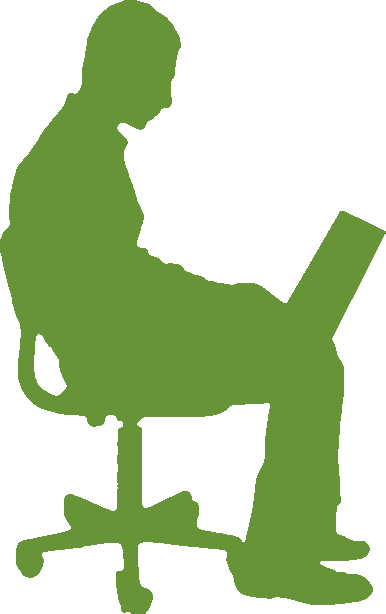
When we sit for long periods the muscles in our lower bodies literally become inactive. Our glutes switch off and become little more than fleshy cushions to support our weight. Our hip flexors become shortened and stiff as our bodies inefficiently attempt to create a stable platform to support the compromised position of our spine. Our shoulders round and our head moves forwards as we hunch over our keyboards and mobile devices.

Sitting is literally like watching a train wreck in slow motion.

Over time these stresses cause pain, reduced mobility, poor health and ultimately a diminished ability to get out and enjoy a vibrant healthy life. 

Health Impacts of sitting

  • Neck pain
  • Tight chest and stiff shoulders
  • Hindered breathing
  • Increased risk of type 2 diabetes
  • Low back pain
  • Muscle degeneration
  • Pelvic floor dysfunction
  • Increased risk of heart disease
  • Weight gain
  • Tight hips
  • Knee pain


Recently my day job became predominently car based, literally requiring me to spend almost the entire work shift behind the wheel. Sure I would take movement breaks every hour or so, but as you can imagine the long hours in the car seat left me feeling stiff and sore by the end of my shift, as my body attempted to adapt to my compromised movement pattern.

After just a few weeks of this I started experiencing lower back pain.
Enter the Kettlebell

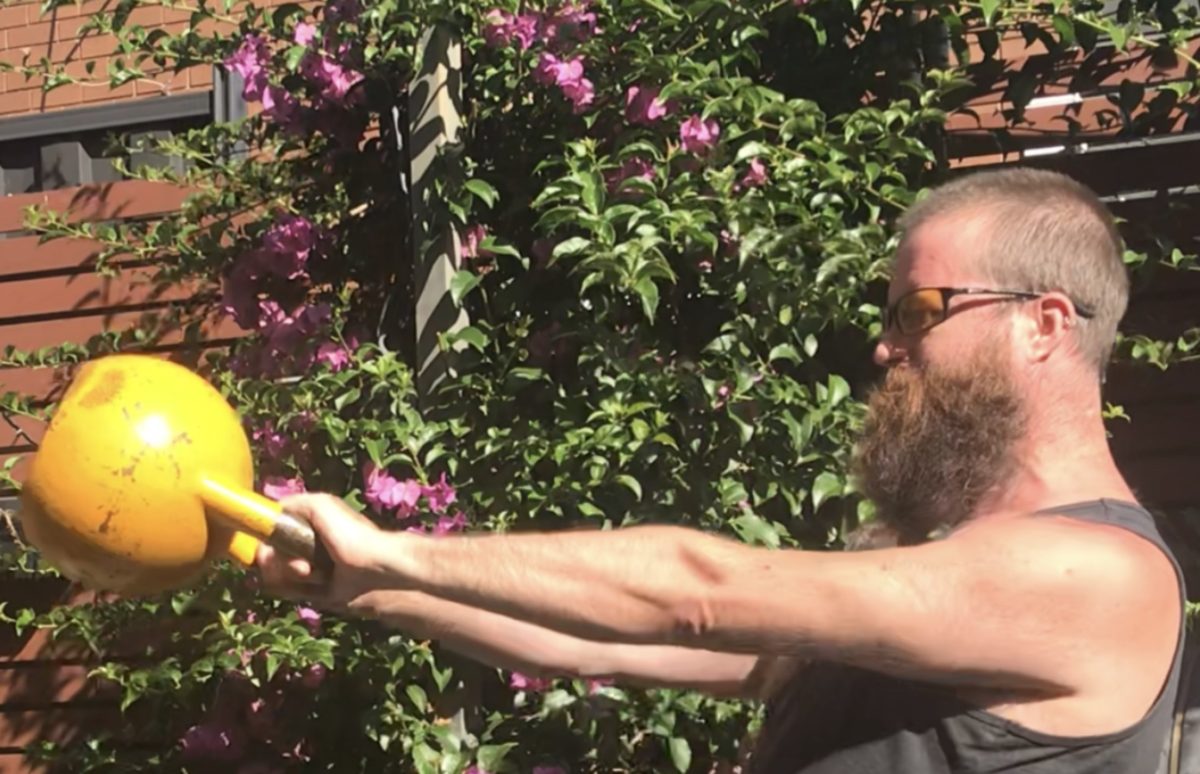
Irritated by the forced immobility of my job I decided to start a regular kettlebell workout during my lunch breaks. Not only did I want to break up the hours spent behind the wheel, but I was curious to see what effect daily moderate workouts would have on my fitness and strength. Kettlebells gave me to ability to work out everyday and anywhere. So I put a 24kg steel kettlebell in the back seat of my car and I was ready to go.

The rules were simple. 10 sets of 10 reps of kettlebell swings with a moderate amount of weight. Each rep had to be perfect and I ensured that I ended each workout with some reps still left in the bank. 

The idea was to treat each session as practice not as a workout and to avoid exercising to exhaustion.

I ended each workout feeling energised and stronger, and over time I progressed from a 24kg kettlebell, to a 28kg and then a 32kg over a three month period. Not bad!

I simply showed up, did the workout and then continued along with my day. It was an easy addition to my day and a simple goal to meet.

The real unexpected surprise was this .. my back pain vanished.

Curious as to how this happened, I hit the books. After a bit of research I discovered that kettlebell training is in fact awesome for your back for a number of reasons.

1. Kettlebell Training strongly activates the glutes.

They get those fleshy meat cushions working again so that your lower back is relieved of the responsibility of doing their job for them.

2. Kettlebell Training stretches the hip flexors.

Exercises like the swing involve driving your hips powerfully forward into full extension – or in otherwords, to stand up straight. This is a built in hip flexor stretch and a reminder that you are capable of greater range of movement than remaining hunched over your keyboard.

3. Kettlebell Training develops back extensor endurance.

Back injuries are more likely to happen when your muscles become tired. High repetition exercises like the kettlebell snatch and swing build muscular endurance better than any other exercise.

4. Kettlebell Training strengthens your core.

Forget about ab curls that have you lying on the ground and mimicking a pretzel. Kettlebell exercises impart the ability to brace your core whilst doing work. You’ll brace your abs during the swing. You’ll brace it during presses. Learn to brace your whilst moving, not just when lying passively on the ground. This will protect your back.

If you’d like to get started with Kettlebells. The Simple and Sinister Program by Pavel Tsatsouline provides an excellent starting point.

(Please note that as an Amazon Associate I earn a small commission from qualifying purchases)
Categories
Explore

How to act courageously

"The opposite of a hero is not a villain - it is a 'bystander' - an individual who does nothing during adverse situations."

A man lay dying in a hallway.

Despite the many people stepping over him in order to get to the bar, his plight was unseen. His slumped body appeared like any other drunk – expected and easily dismissed – and therefor invisible.

I was working behind the bar, not 10 metres from where he lay, but the hallway created a blind spot where I could not see. Precious moments ticked by as he moved towards the point of no return, where death became inevitable and any intervention pointless. Yet people still stepped around him and help was not forthcoming.

Finally a man come over to the bar, “just to let you know, there is someone passed out in the hallway”, he said as I handed him his drink.

By the time we got to him his body was pale and unresponsive, glassy eyes stared unseeing at the ceiling and his face was waxy and contorted in pain. I vividly remember hearing him take a gurgling breath as I squeezed his cold hand and spoke to him. 

It was to be his last breath. Ever.

We commenced CPR and called an ambulance.

Upon arrival they quickly took over, allowing us to step away so we could attempt to manage the many bystanders, and those still wanting to use the bar.

People were clearly annoyed that their night had been disturbed by the commotion and I soon found myself stifling an outraged scream at their entitled attitude. It seemed insane that people were wanting to continue their night of partying whilst a man lay dying nearby.

I announced the bar was closed and started ushering people out of the club.

By now the paramedics had attached a defibrillator to the mans chest, whilst continuing to perform CPR.

“Evaluating heart rhythm”, the defibrillator reported and the paramedics moved their hands from the mans chest. A moment later “Delivering shock”.

A few moments passed. No response. Expert hands returned to performing CPR whilst the unit prepared to deliver another shock. 

This cycle continued for about half an hour, but they were ultimately unsuccessful. The paramedics were unable to revive him and so he was pronounced dead at 3am.

The sun was high in the sky when I finally returned home.

Not that I could’ve slept anyway. My mind was still ablaze as I attempted to process the events of the previous night. 

“How long was the body in the hall before somebody noticed?” The policewoman had asked, nodding towards the body as it was moved into the ambulance. 

“No longer a person, but a body,” I’d thought. “I don’t know,’ I replied, to her obvious disatisfaction, her pen scribbling my answer in a pad.

I felt guilty of course, tired and emotionally about to break. She noticed and her expression softened. The pen stopped and hovered over the paper.

A pause.

“You did everything right,” she said kindly.

But now I was home and alone with my thoughts. I couldn’t help but replay the entire event in my mind, over and over. Trying to understand.

How is it that so many people walked past him as he lay there dying? I asked myself.

I pictured him stumbling towards the front of the club, hand clutching at his chest as a terrifiying and unknown pain spread throughout his body. In agony, he stumbles and crashes heavily to the floor. He reaches his hand towards the people brushing past him and in a moment of absolute horror, realises that they can’t even see him. 

The same horror that was frozen on his face when we found him.

Again and again the event replayed itself in my mind and the understandable feelings of shock, confusion and sadness, started to turn to anger.

Why did no-one stop to help?

Why did no-one stop to help?

This was the question to which I would often return, long after the shock and sadness of the event had faded away. It would be a long time before I had an answer, which as it turned out, came quite by accident.

The bystander effect is a social psychological phenomenon in which individuals are less likely to offer help to a victim when other people are present. The greater the number of bystanders, the less likely it is that any one of them will help.

Several factors contribute to the bystander effect, these include ambiguity, group cohesiveness, and the diffusion of responsibility, which together reinforces a shared denial of a situations severity.

In other words, we don’t act as we’re not sure what’s going on, we don’t want to behave differently to others, we assume that others are better qualified to act and since those others are not acting, then perhaps we don’t need to either.

All these factors where at play that night, including the added complication of alcohol.

These are all powerful social influences that impact us all, and I absolutely include myself. In time I came to realise that given similar circumstances, if I had been in the crowd, it’s possible that I may have been one of the people who stepped past the man as he lay dying.

It’s an extremely uncomfortable thought. Horrifying actually. We all like to assume that when faced with a difficult situation that we would “do the right thing’ but the research shows that this is not a safe assumption.

And so the question becomes, how do you ensure that you act when action is required. How do you resist the social influences that cause us to become bystanders?

How to act with courage when circumstances demand it

Practice Humility.

Practice humility by accepting the possibility that given similar circumstances, that you may also have failed to give help. Then, having confronted that unpleasant thought, resolve to take the actions required to ensure that you do act courageously when required.

Practice small acts of courage. Daily.

Heroism is less about exceptional individuals swooping in to save the day than it is about everyday people acting on instincts that have been developed over a lifetime. This could mean speaking up against casual homophobia and sexism in the workplace, it could be a small act of kindness towards a stranger, it could mean asking someone if they are alright. Practice these courageous behaviours so that they become part of your identity.

Skill-up.

One of the reasons we don’t act is because we don’t know what to do. Yet skills like CPR are simple to learn and practice. Many workplaces will even pay for you to obtain this life saving skill. Identify useful skills and then learn them.

Categories
Eat

Keto Breakfast Slice

Make your mornings easier with this Keto Breakfast Slice

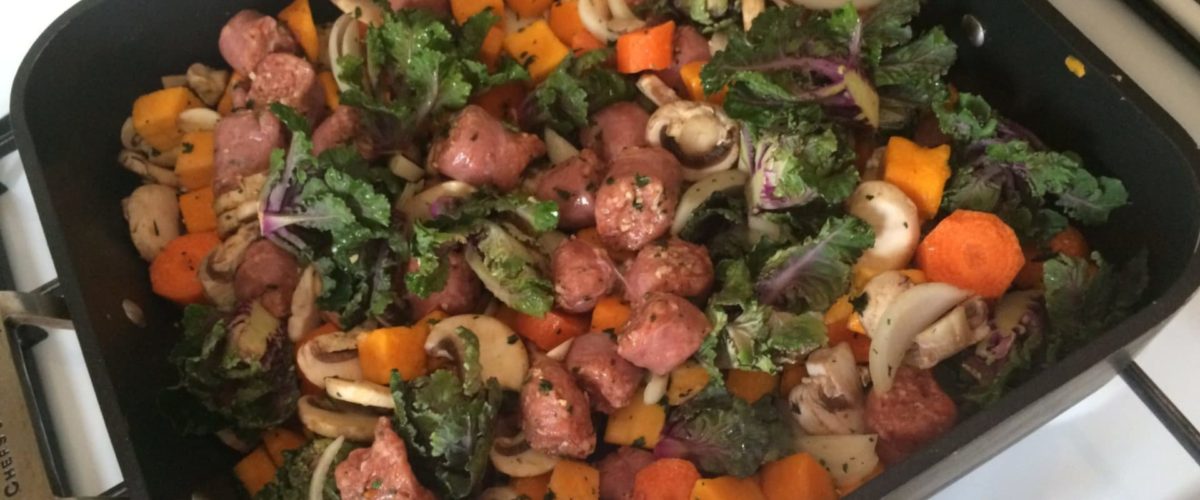
This Keto Breakfast Slice is my solution to a busy morning. It’s simple, filling, can be made ahead of time, and can be easily reheated in the microwave (about 1 minute on high should be sufficient).

If you’re a fat adapted beast and are in the habbit of skipping breakfast then these also make a great lunch. Just serve with a simple side salad and you’re good to go (and go).

Feel free to change up this recipe based on whatever vegetables you happen to have available. Just remember that if you’re on the keto diet that you’ll want to include veges like onion, brocolli, brussel sprouts and mushrooms because they are lower in carbs. If you’re more paleo inclined then add some sweet potatoes or pumpkin into the mix.

Once cooked, you can wrap up and freeze individual portions in the freezer so that you’ve always got a healthy option ready for breakfast.

Keto Breakfast Slice

Ingredients:

  • 6 wheat free sausages – sliced
  • 500g diced pumpkin
  • sliced red onion
  • 250g mushrooms
  • 4 carrots sliced
  • handful of brussel sprouts (or other green veg) sliced in half
  • Minced garlic
  • 1 tbsp Ghee (or fat of choice) melted
  • Salt and pepper to taste
  • 10 eggs
  • mixed herbs
  • Block of Feta Cheese

Instructions:

  1. Couldn’t be easier. Preheat oven to 180 degrees celsius. Combine all the ingredients except for the eggs, sausage and fetta and place in a deep roasting tray.
  2. Cook until vegetables are roasted.
  3. Remove from the oven and allow to cool.
  4. Chop up the sausage into bite size pieces and mix into the vegetables
  5. Whisk the 10 eggs and pour over the vegetable mix, sprinkle the feta on top.
  6. Return to the oven and cook until egg is set.
  7. Remove from the oven and cut into slices.

Serves: 9

Categories
Eat

Chicken With Basil Pesto And Zoodles.

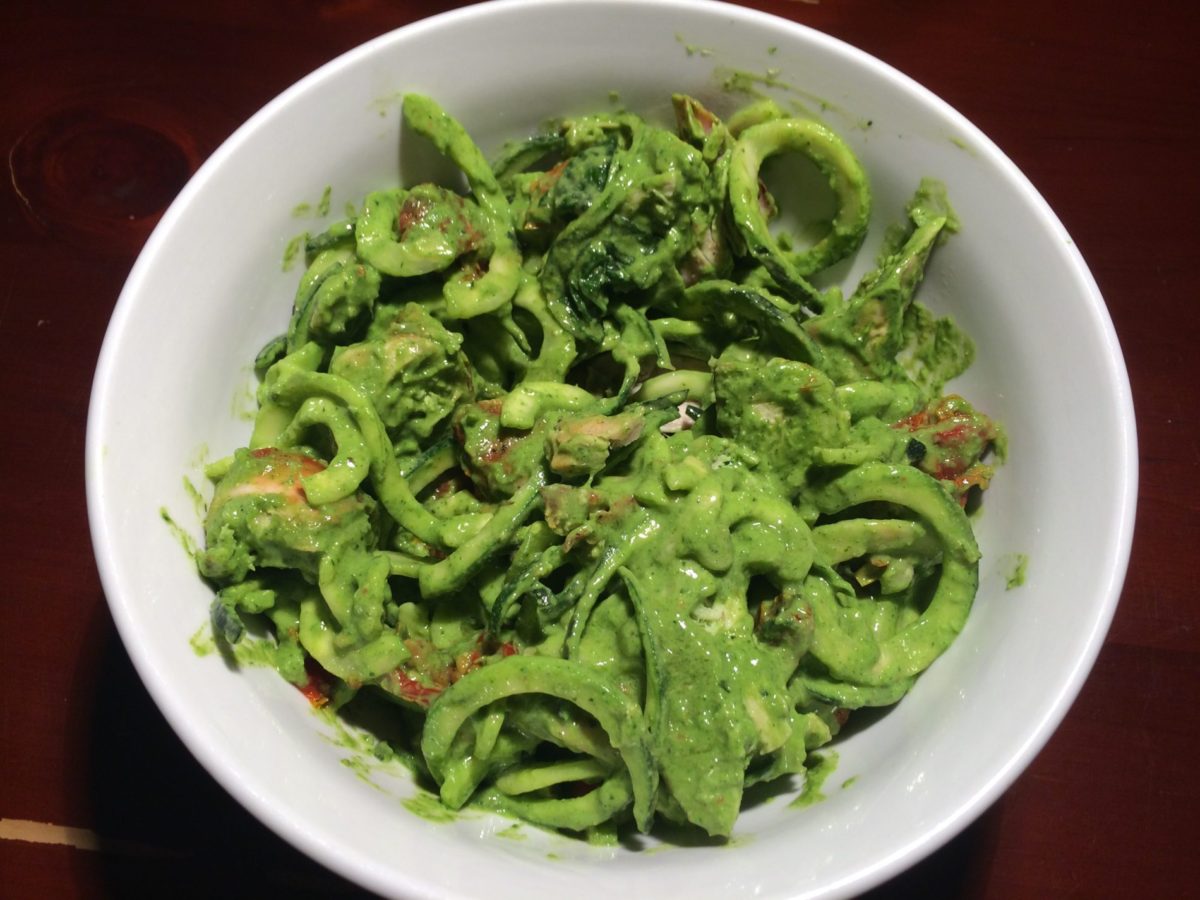
I came up with this combination when a friend of mine who had recently completed radiation therapy for a cancer in his mouth dropped by for a vist. The radiation treatment profoundly affected his ability to taste certain foods and so I thought using a flavourful basil pesto for the base of this dish might work for him.

He loved it.

We also shared some spiced mead afterwards that also went down a treat. 

Chicken with basil pesto and zoodles.

Ingredients:

  • 3 medium zucchini, sliced into noodles using a spiralizer (you could also use a vegetable peeler)
  • 1 cup cooked and shredded chicken
  • 1/4 cup sun-dried tomatoes thinly sliced
  • 2 cups fresh basil
  • 1 cup parsley
  • 1 medium avocado
  • 1/3 cup roasted pine nuts
  • 2 cloves garlic
  • 2 TBSP lemon juice
  • 1 TBSP extra virgin olive oil
  • water
  • Salt and Pepper to taste

Instructions:

  1. In a large bowl, toss the zucchini noodles with the chicken and sun-dried tomatoes.
  2. In a food processor fitted with a steel blade, combine the basil, parsley, avocado, pine nuts, garlic, lemon juice, and olive oil. Process until combined. With the processor running, add just enough water to make a smooth but not runny sauce. Season with salt and pepper to taste.
  3. Toss the sauce with the zucchini to coat. Serve immediately.
Serves: 2
Categories
Eat

Paleo Chorizo Pork with Sweet Potato Hash

I love Chorizo, but as a highly processed meat it can have a number of undesirable ingredients and additives.

So as a bit experiment I came up with the following breakfast treat.

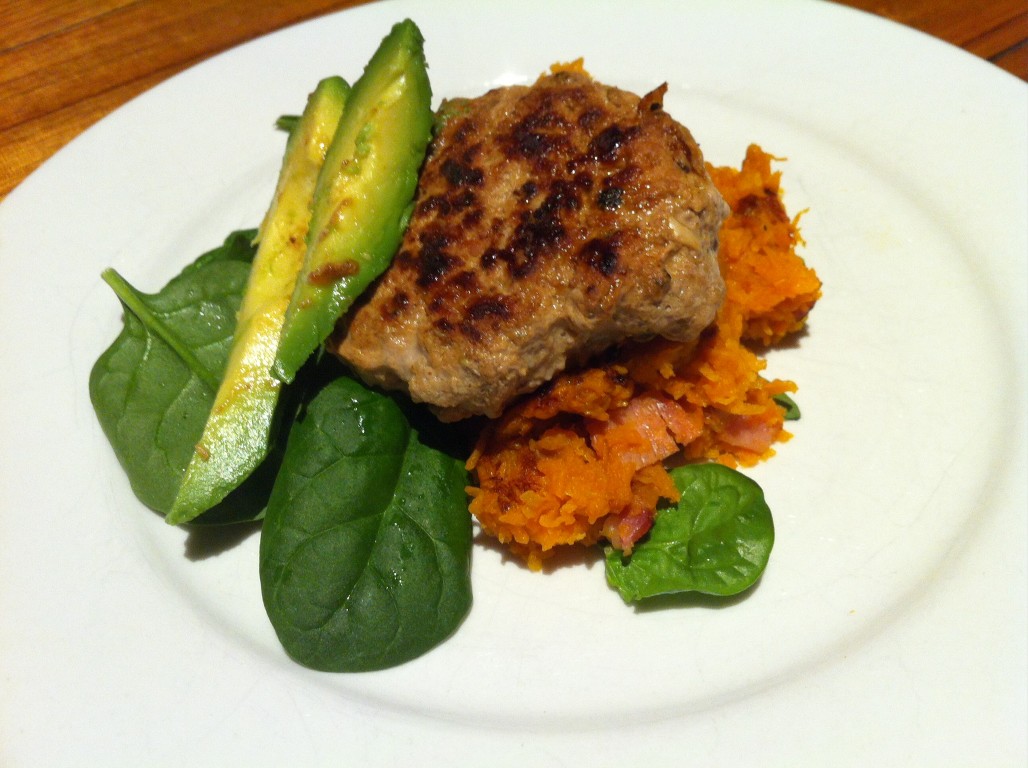
Paleo chorizo pork with sweet potato hash

Ingredients:

  • 1kg Minced pork
  • 25g salt
  • 1 ½ tbsp. smoked paprika
  • 3 garlic cloves, crushed
  • 1 ½ tbsp. crushed black peppercorns
  • 1 ½ tbsp. fennel seeds
  • 25-50ml red wine
  • Handful spinach
  • 1 large sweet potato
  • 2 rashers of sugar and nitrate free bacon (fat trimmed)
  • Avocado
  • Coconut oil

Instructions:

  1. Mix the minced pork, spices, and wine in a bowl and mix until well combined.
  2. Leave the mix in the fridge overnight to allow the flavours to mix.
  3. Shape into rissoles.
  4. Peel then grate the sweet potato in your food processor.
  5. Dice the bacon and then mix it into the sweet potato.
  6. Heat coconut oil in a fry pan and then add the sweet potato.
  7. Cook until the sweet potato starts to brown, use a spatula to flip it to the uncooked side. Clear a space in the pan for your chorizo pork and add a couple to the pan (freeze the rest).
  8. Arrange some spinach on a plate with some avocado slices. Top with your cooked sweet potato and chorizo.

Serves: Makes 8 patties

Yes I'm IN!