Categories
Move

Don’t Throw In The Towel – Use It To Improve Your Forearm Strength.

I like simplicity. I also like exercises that get the job done, don’t require expensive equipment and teach movements that you actually use in everyday life.

I also like dry towels.

Here is a forearm/grip exercise that ticks all those boxes and doesn’t require that you flap your way through hundreds of useless wrist extensions.

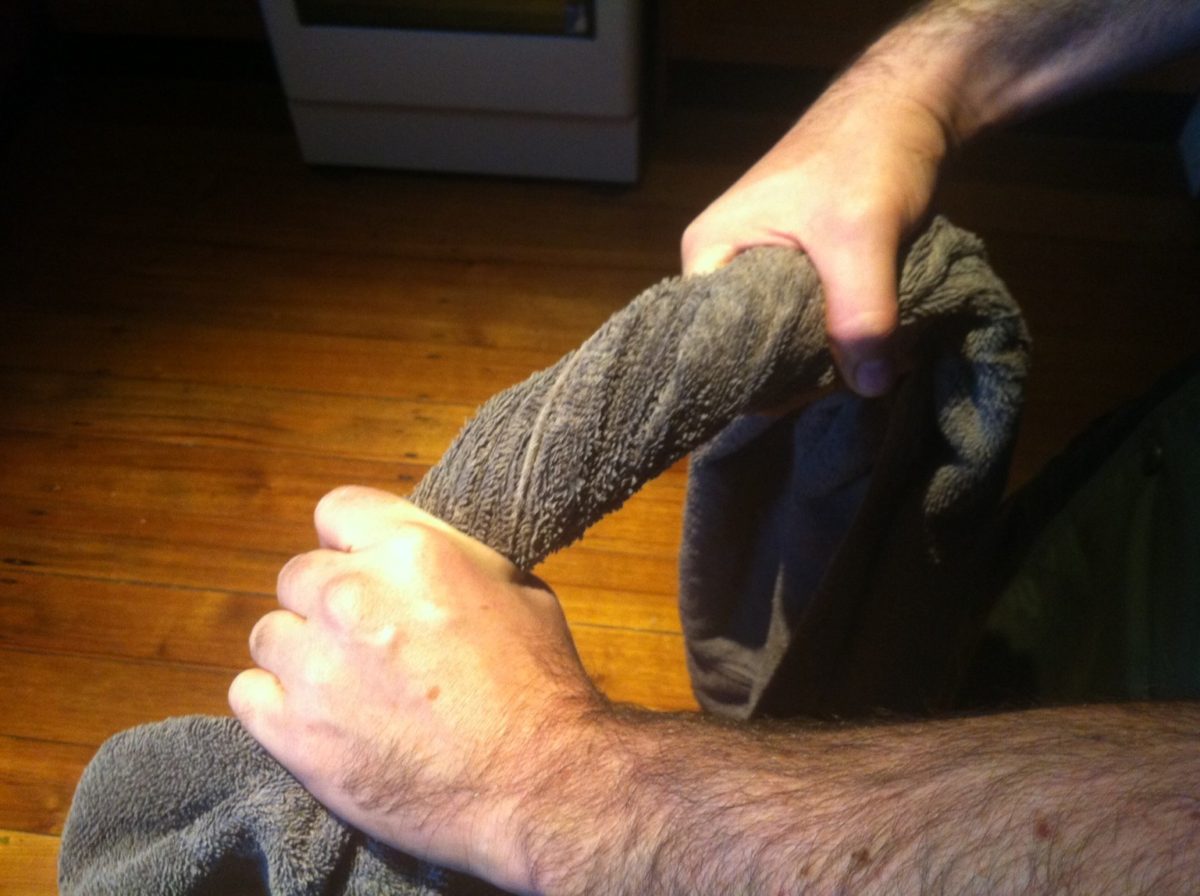
Grab a towel (a bath towel please, not a dainty face-washer) and dunk it in a bucket of water until it’s soaked through.Grip the towel tightly in your hands and wring and squeeze it until it’s almost touch dry.Squeeze it as hard as you can. Make it pay for being foolish enough to fall into that bucket (ok so you may have pushed it in, but it doesn’t need to know that).

Managed to get all the water out? Well done. Put it back in the bucket and start again.

Want to make it harder? Fold it in half. Wet it. Wring it out.

Even more challenging? Fold it again. Wet it. Wring it out.

Do this a few times and not only will your forearms cry for mercy, but you will also have a nice dry towel and a new found appreciation for your clothes line.

Enjoy!
Categories
Move

How to use Kettlebells to combat the effects of sitting.

When we sit for long periods the muscles in our lower bodies literally become inactive. Our glutes switch off and become little more than fleshy cushions to support our weight. Our hip flexors become shortened and stiff as our bodies inefficiently attempt to create a stable platform to support the compromised position of our spine. Our shoulders round and our head moves forwards as we hunch over our keyboards and mobile devices.

Sitting is literally like watching a train wreck in slow motion.

Over time these stresses cause pain, reduced mobility, poor health and ultimately a diminished ability to get out and enjoy a vibrant healthy life. 

Health Impacts of sitting

  • Neck pain
  • Tight chest and stiff shoulders
  • Hindered breathing
  • Increased risk of type 2 diabetes
  • Low back pain
  • Muscle degeneration
  • Pelvic floor dysfunction
  • Increased risk of heart disease
  • Weight gain
  • Tight hips
  • Knee pain


Recently my day job became predominently car based, literally requiring me to spend almost the entire work shift behind the wheel. Sure I would take movement breaks every hour or so, but as you can imagine the long hours in the car seat left me feeling stiff and sore by the end of my shift, as my body attempted to adapt to my compromised movement pattern.

After just a few weeks of this I started experiencing lower back pain.

Enter the Kettlebell

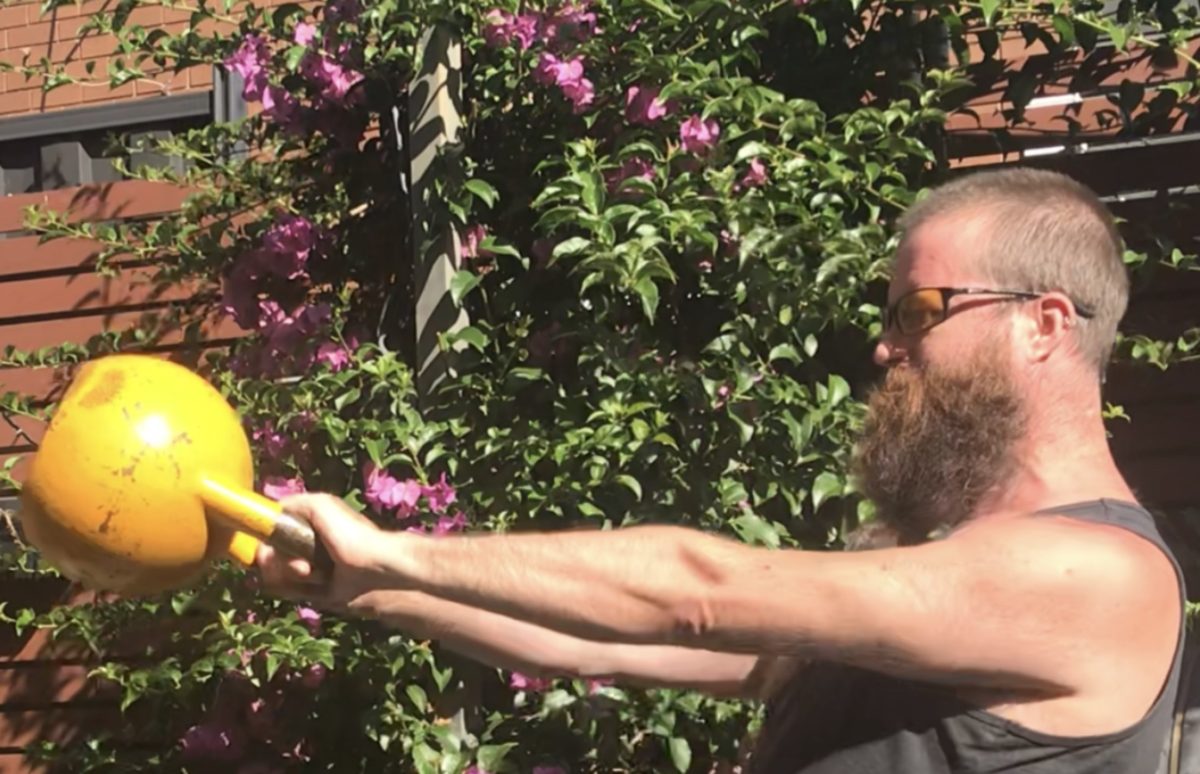
Irritated by the forced immobility of my job I decided to start a regular kettlebell workout during my lunch breaks. Not only did I want to break up the hours spent behind the wheel, but I was curious to see what effect daily moderate workouts would have on my fitness and strength. Kettlebells gave me to ability to work out everyday and anywhere. So I put a 24kg steel kettlebell in the back seat of my car and I was ready to go.

The rules were simple. 10 sets of 10 reps of kettlebell swings with a moderate amount of weight. Each rep had to be perfect and I ensured that I ended each workout with some reps still left in the bank. 

The idea was to treat each session as practice not as a workout and to avoid exercising to exhaustion.

I ended each workout feeling energised and stronger, and over time I progressed from a 24kg kettlebell, to a 28kg and then a 32kg over a three month period. Not bad!

I simply showed up, did the workout and then continued along with my day. It was an easy addition to my day and a simple goal to meet.

The real unexpected surprise was this .. my back pain vanished.

Curious as to how this happened, I hit the books. After a bit of research I discovered that kettlebell training is in fact awesome for your back for a number of reasons.

1. Kettlebell Training strongly activates the glutes.

They get those fleshy meat cushions working again so that your lower back is relieved of the responsibility of doing their job for them.

2. Kettlebell Training stretches the hip flexors.

Exercises like the swing involve driving your hips powerfully forward into full extension – or in otherwords, to stand up straight. This is a built in hip flexor stretch and a reminder that you are capable of greater range of movement than remaining hunched over your keyboard.

3. Kettlebell Training develops back extensor endurance.

Back injuries are more likely to happen when your muscles become tired. High repetition exercises like the kettlebell snatch and swing build muscular endurance better than any other exercise.

4. Kettlebell Training strengthens your core.

Forget about ab curls that have you lying on the ground and mimicking a pretzel. Kettlebell exercises impart the ability to brace your core whilst doing work. You’ll brace your abs during the swing. You’ll brace it during presses. Learn to brace your whilst moving, not just when lying passively on the ground. This will protect your back.

If you’d like to get started with Kettlebells. The Simple and Sinister Program by Pavel Tsatsouline provides an excellent starting point.

(Please note that as an Amazon Associate I earn a small commission from qualifying purchases)

Yes I'm IN!